This article outlines the roles and responsibilities of those managing the risk of asbestos in UK non-domestic properties, built before 2000.
Asbestos is a silent killer, causing approximately 5000 deaths each year in the UK. Disturbing asbestos fibres can create a serious health hazard that often goes undetected until decades after exposure. That’s why managing the risk of asbestos in non-domestic premises is a legal requirement as per The Control of Asbestos Regulations 2012 (CAR 2012), Regulation 4.
While the legal responsibility for managing asbestos risks lies with the duty holder, the duty holder is often supported by other members of an organisation who carry out the day-to-day monitoring and checks. This article outlines typical examples of those involved in managing the risk of asbestos in non-domestic properties, and how the Appointed/Responsible Persons (ARPs) support the duty holder.
The Duty Holder
A duty holder is legally responsible for keeping non-domestic premises—including all commercial and industrial buildings—safe from the risk of asbestos. Who the duty holder is often depends on the size of the organisation and structure, but usually this is someone in senior management. They have a legal responsibility to manage the risk but can delegate the actions to a competent person(s). The duty holder can be the building’s owner, the landlord, or a person within the organisation with full responsibility for access/egress, and for the building’s installations, maintenance and repairs. Read full guidance regarding the duty to manage from the Health and Safety Executive
Duty holders achieve compliance by creating key management documents that:
- Identify the location of asbestos-containing materials (ACMs) and their condition (an asbestos survey, including a room-by-room register)
- Prioritise actions, including ACMs needing remedial action (a risk assessment and action plan)
- Outline how ACMs will be managed, who else has actions for managing asbestos, how workers or contractors will be communicated with, and emergency protocol if asbestos is disturbed (an asbestos policy and management plan)
Ensuring these documents are shared with the correct people and are properly adhered to is key to maintaining effective asbestos management compliance. In many organisations, the duty holder is supported by an Appointed/Responsible Person.
Appointed/Responsible Person
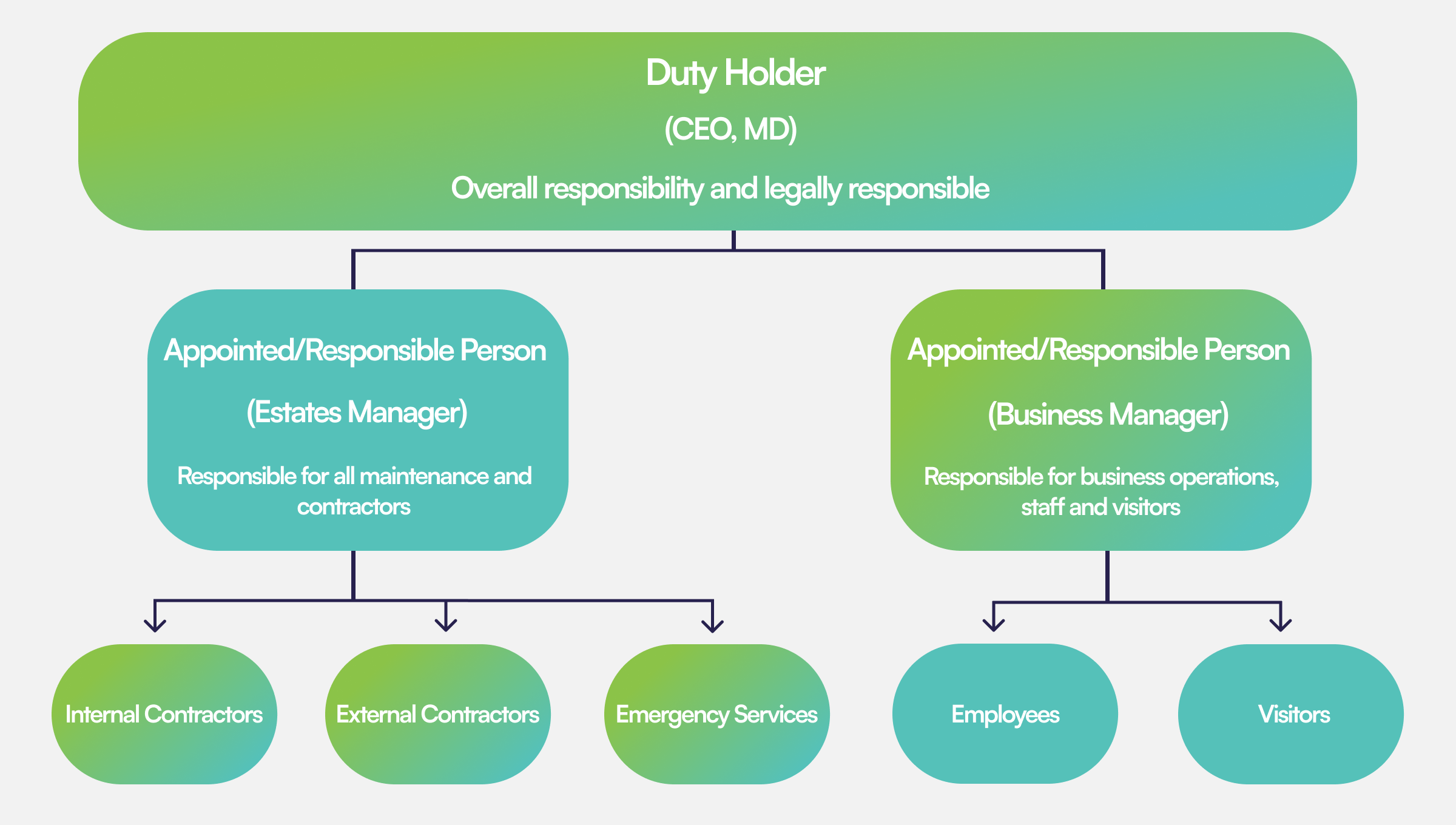
An Appointed/Responsible Person must be competent, familiar with the key documents and procedures, and responsible for ensuring important information from these documents reaches the correct people. The image above shows an example of the typical roles in an organisation and how it is structured.
Estates manager
As someone who is responsible for the maintenance and longer-term planning of a building, the estates manager co-ordinates and communicates with trades and professionals who work in the space that the estates manager oversees. Estates managers need to ensure they have the most up-to-date compliance information and must communicate the location and condition of any ACMs to internal and external contractors (including sub-contractors) before work can begin. Estates managers are also responsible for communicating the location and condition of any ACMs to the emergency services, in the event of a fire, incident or accident.
Business manager
While estates managers usually communicate asbestos risks to internal and external trades, business managers can often be responsible for communicating similar information to staff and visitors, making sure the correct protocols are followed, especially in the event of any asbestos disturbance. The business manager may be involved with writing a communication plan that outlines how and when relevant parties are told the information they need to safely carry out their duties in a building that contains asbestos. This plan will be approved by the duty holder.
Clear planning and communication of responsibilities is the key to good compliance
While the duty holder is legally responsible for ensuring an organisation fully complies with CAR 2012, they are usually supported by other members of staff who have the correct level of competency to be an Appointed/Responsible Person. APRs play a crucial role in ensuring asbestos compliance strategy translates into regular, documented behaviours and actions that keep people and buildings safe. Clear policy, procedures, roles and responsibilities, along with good communication by the duty holder, Appointed/Responsible Person(s), and any other party involved in the safe management of asbestos, go a long way to creating a robust, compliant and successful asbestos compliance strategy.
Need some help improving your asbestos strategy?
We’ve been helping hundreds of organisations across the UK maintain compliance for over 30 years. Take a look at our Asbestos Consultancy Services for compliance management, training needs analysis, asbestos policy & management plans, surveys, removal & remedial works, site audits and more.