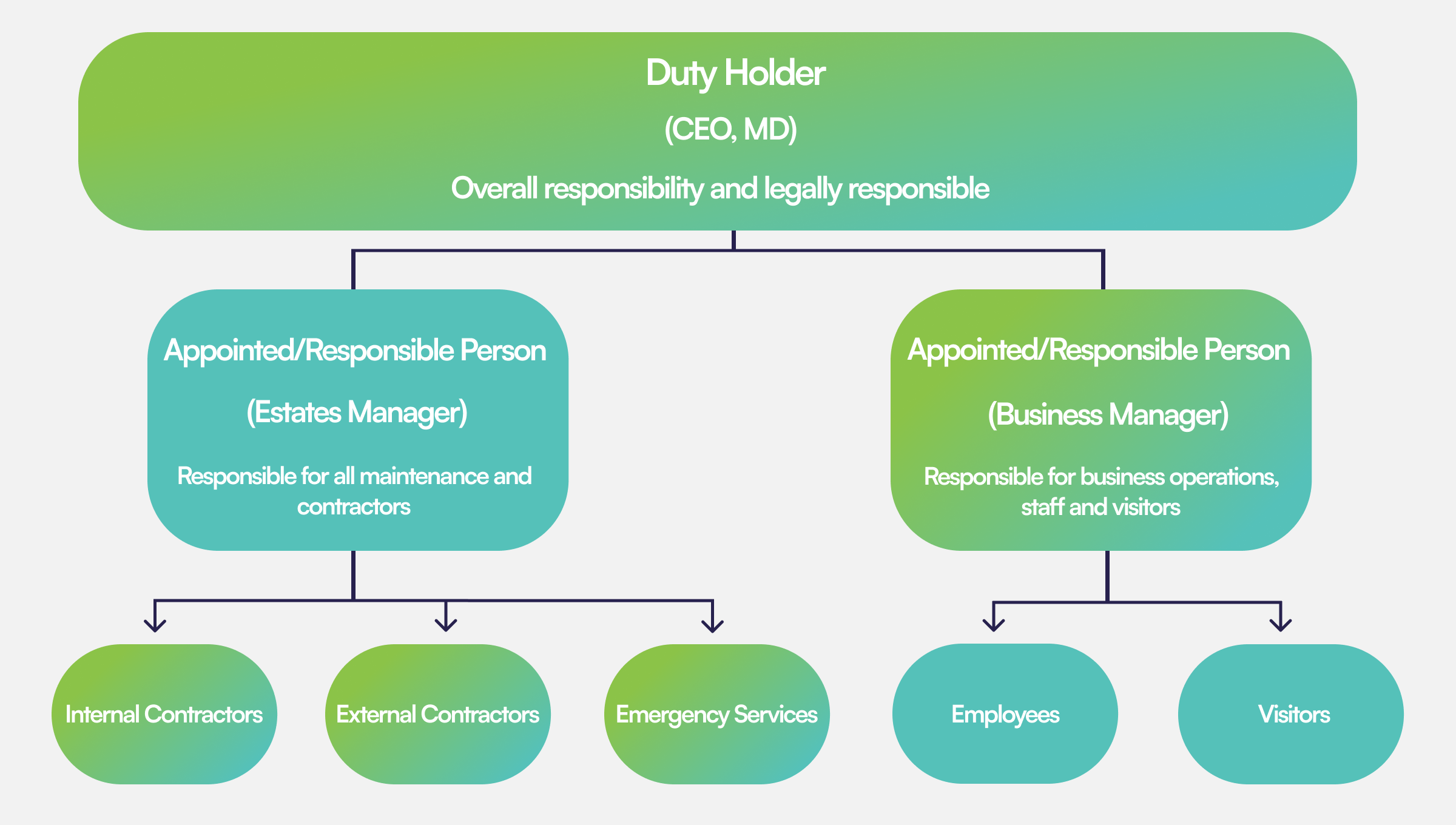
In the UK, duty holders are legally responsible for keeping non-domestic buildings and spaces safe from asbestos. As outlined by the Health and Safety Executive, you could be the duty holder if you’re:
- The owner of the building
- The person who has control of the premises e.g. the landlord
- The person who has clear responsibility for the building’s maintenance and repair
Duty holders have regular and proactive parts to play in keeping a building or space safe, and sometimes oversee the work of others, so it’s important to be clear on the steps to take if you’re a duty holder. This article outlines 5 actions a duty holder should take in order to manage the risk of asbestos effectively.
- Find out if asbestos is present in your building If you’re new to the role of duty holder for a building, look for a previous asbestos survey, asbestos register or asbestos management plan. You could speak to previous tenant or owner or facilities management company to find out where asbestos-containing materials (ACMs) are, and how they’ve been managed to date. Gather as much historical information as you can. And if in doubt…
- …arrange for an asbestos management survey to be completed by a UKAS-accredited surveying company It’s a good idea to get a survey carried out —ideally an accredited one—when taking responsibility for a new building. Instruct a competent asbestos surveyor. Discuss the findings with them and keep the survey report they provide.
- Discuss management actions and findings contained in the survey register. Prioritise any urgent action. The asbestos register will form part of your asbestos management plan. An asbestos register—which can be made in paper or digital format—provides a snapshot of any ACMs currently present (or assumed to be) in the building, their condition and an evaluation of the risk for potential exposure. Your register should also contain information on:
- The type of ACM
- The location of ACMs
- Where ACMs are presumed to be if an area couldn’t be accessed during the survey
- A priority risk assessment (how likely it is that ACMs will be disturbed by building occupants)
- A material assessment (how easily fibres could be released if disturbed). This will have been provided in your survey report.
For each ACM it’s prudent to photograph the location and note any due dates; anything that helps you better manage an ACM. Your register should be updated every 12 months, or when the level of risk for an ACM changes.
- Write an asbestos management plan and review it every 12 months (or sooner)
It should contain:
- Details of those responsible for managing asbestos risk
- The asbestos register
- A site plan of where ACMs are located, including areas that weren’t accessible for survey
- A schedule showing how often ACMs will be checked
- Emergency steps to take if ACMs are disturbed
- Ways to ensure ACMs aren’t damaged
- A plan to ensure work on asbestos is carried out by competent and fully trained professionals
- Details of how the register will be shared with contractors completing maintenance work
Your asbestos management plan should also contain a priority plan for managing asbestos risk. It will also outline the necessary training that employees will complete if they are likely to come across asbestos during their work, and how these employees will be effectively communicated to.
It’s crucial to keep your asbestos management plan and register up to date. According to the Health and Safety Executive, this is a common failing so it’s important to schedule in timely reminders to review ACMs.
- Tell contractors, emergency services or anyone else who may work on your building(s) the location of any ACMs before entering the building. When emergency services are called to a building, it’s easy to overlook the risk of asbestos when fire immediately threatens lives and property, but it’s important that you communicate the location and condition of ACMs to reduce the risk of asbestos exposure.
Arrange your asbestos survey today
Are you new to the role of duty holder in a particular building or space? Get reliable, up-to-date information on the asbestos in your building right now with a UKAS-accredited survey. Our surveys are available 24/7, and on an emergency basis. Use our quick and easy online form to arrange your asbestos survey